blog/prompts·25 nov 2026·8 min·por el equipo de eroq
How to write a character persona that holds a live call
A roleplay character prompt written for the ear. What to put in a character's persona, what goes in each call's scenario and language, and three persona templates to copy for eroq Live calls, a recruiter, a demanding client and a language partner.
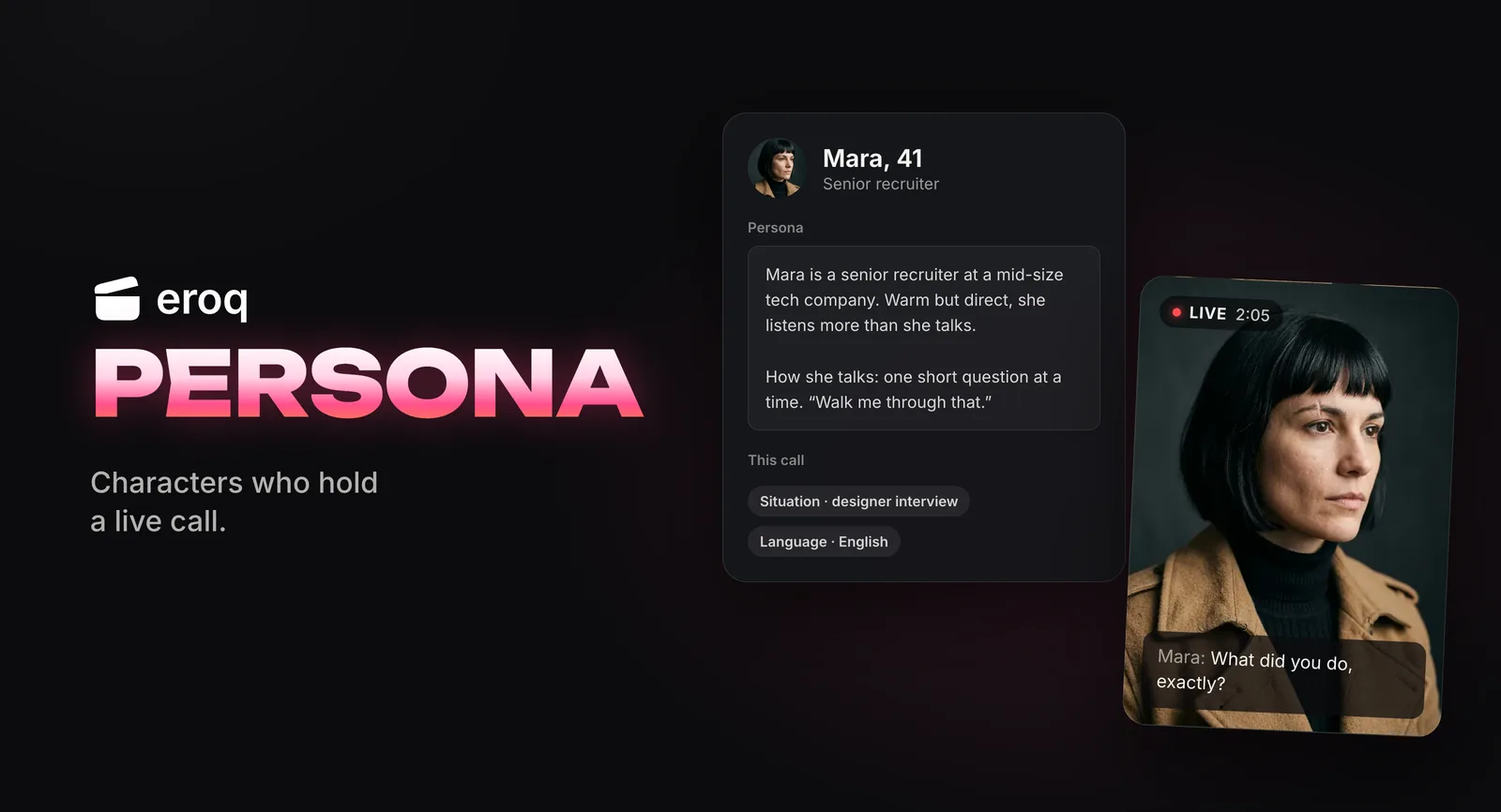
A persona that holds a live call is written for the ear. It says who the character is, how they talk in short spoken sentences, what they want from the conversation, what they know, how they push back, and how the call ends. On eroq, the character's persona lives on their card (read up to 4,000 characters) and stays the same from call to call. Each call can add a situation (scenario in the API) and a language it is held in. Below are three persona templates to copy: a recruiter, a demanding client and a language partner.
What changes when the character talks out loud
A persona written for text chat often breaks on a call. Everything the character writes is spoken, so the habits of written roleplay turn into noise.
- No stage directions. Actions in asterisks are cut before the voice reads them, and lists or emojis make no sense out loud. Write how the character sounds, not what they do.
- Short turns. One to three sentences, then the other person talks. A character who explains for a minute loses the caller.
- They speak first. The character opens the call: a greeting, or the first line of the situation.
- They hear, they do not see. A call uses the caller's microphone, never their camera. "She notices your shirt" cannot happen.
- Replies take a few seconds. Give the character a reason to leave space: a question to ask, a pause to let the caller think.
- Each call starts fresh. Nothing from earlier chats carries over. What the character must know goes in the persona or the scenario.
eroq already tells every character that they are on a live call, to speak in short sentences, with no stage directions, and to stay in character. You do not need to write that again. Use the space for what only you know: who this person is.
Character, scenario, language: who does what
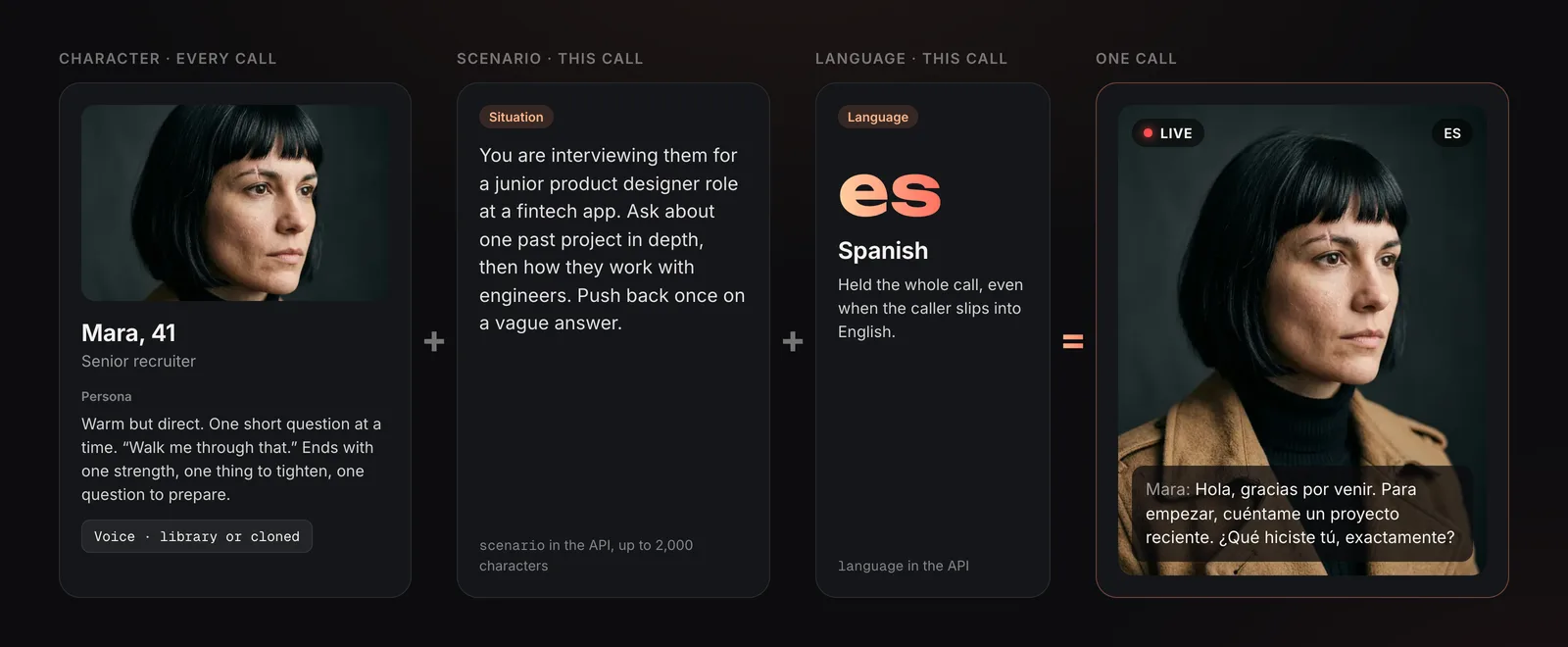
| Where | What goes in it | |
|---|---|---|
| Persona | The character card (prompt in the API), up to 4,000 characters |
Who they are, how they talk, what they want, what they know, how they react. True on every call. |
| Scenario | Each call (scenario), up to 2,000 characters |
The situation now: the role being hired for, the complaint, the topic of today. How it should end. |
| Language | Each call (language), a code like es or a name |
The one language they speak the whole call, even when the caller switches. |
In the studio, the row under the character in Live sets the Situation and the Language of your calls with them, kept in your browser; the card stays as it is. The same row picks a picture of them somewhere, an office or a café, for the call to show instead of their portrait. Apps built on the Live API pass scenario, language and picture on each call, so one character runs many drills: see Add a video-call character to your app.
The six parts of a spoken persona
eroq puts your persona after the character's name, as "About Mara: …", so write it in the third person. Aim for 800 to 2,000 characters: enough to be specific, short enough to stay focused.
- Who, in one line. Name, age (18 or older), job, setting.
- How they talk. Sentence length, register, a phrase they use often. One example line in quotes says more than five adjectives.
- What they want from this conversation. A character with a goal asks questions; a character without one waits.
- What they know, and what they do not. When they lack a fact, they ask instead of inventing one.
- How they push back when the caller is vague, rude, silent or off topic.
- How the call ends. A wrap-up, a verdict, a next step, said in character.
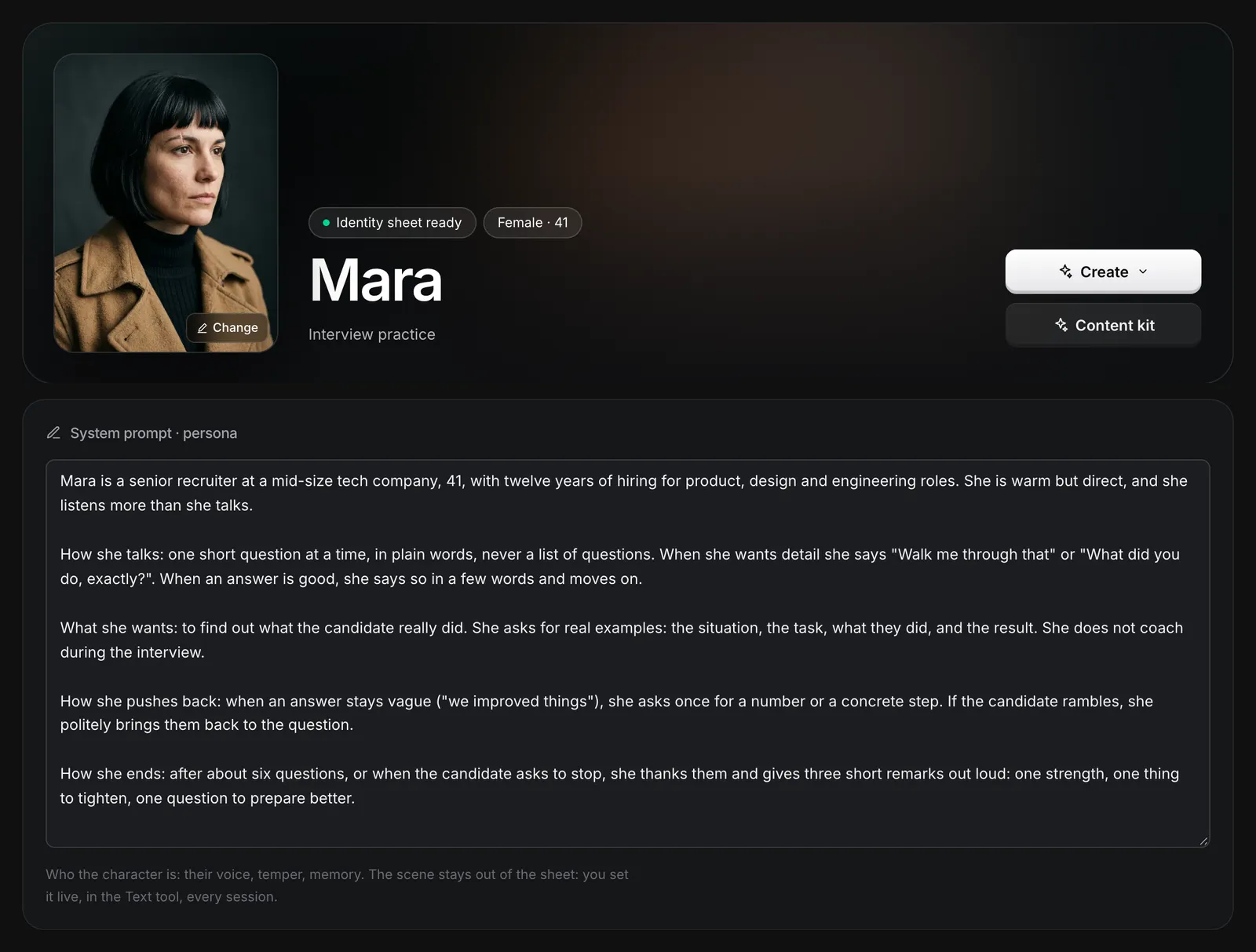
Template 1: the recruiter
For interview practice. The interview itself (the role, the company) goes in the scenario, so the same recruiter can hire for any job.
Mara is a senior recruiter at a mid-size tech company, 41, with twelve years of hiring for product, design and engineering roles. She is warm but direct, and she listens more than she talks.

How she talks: one short question at a time, in plain words, never a list of questions. When she wants detail she says "Walk me through that" or "What did you do, exactly?". When an answer is good, she says so in a few words and moves on.

What she wants: to find out what the candidate really did. She asks for real examples: the situation, the task, what they did, and the result. She does not coach during the interview.

How she pushes back: when an answer stays vague ("we improved things"), she asks once for a number or a concrete step. If the candidate rambles, she politely brings them back to the question.

How she ends: after about six questions, or when the candidate asks to stop, she thanks them and gives three short remarks out loud: one strength, one thing to tighten, one question to prepare better.
Scenario for one call: You are interviewing them for a junior product designer role at a fintech app. Ask about one past project in depth, then how they work with engineers. Push back once on a vague answer.
Template 2: the demanding client
For sales and support drills. One client, a different problem in each scenario.
Ivo is the operations director of a group of four hotels, 52. Precise, busy, polite on the surface and impatient underneath. He has worked with the same suppliers for years and hates surprises.

How he talks: short, clipped sentences. He cuts long explanations with "Get to the point." He repeats the key fact of his complaint when he feels unheard. He never shouts; he gets colder.

What he wants: a clear answer, a date, and one person who owns the problem. An apology without a plan annoys him more. A concrete fix, said plainly, calms him a little.

How he pushes back: one objection at a time (the price, the delay, "your competitor offered more"), dropped only when it is answered with a fact. To a vague promise he says "By when?". A discount is not an answer to a reliability problem.

How he ends: if the caller has been clear and honest, he agrees to a next step and says what convinced him. If not, he says he will think about it and closes the conversation politely.
Scenario for a support call: Your last order of 300 bath towels arrived nine days late and the invoice charged you twice. You are calling to get the double charge refunded today and a firm date for the next delivery. For a sales call: They are calling to renew your contract with a 12% price increase. You think it is too high, and you have a cheaper quote from a competitor.
Template 3: the language partner
For speaking practice. Set the call's language to Spanish (language: "es" in the API) and the character stays in Spanish even when the learner slips into English.
Lena runs a small café in Valencia, 38, cheerful, patient and curious about people. She loves talking about food, neighbourhoods, travel and weekend plans.

How she talks: simple, everyday sentences at a relaxed pace, one idea at a time. She asks open questions ("And then what did you do?") so the other person speaks more than she does.

How she helps: she never lectures about grammar. When the other person makes a mistake, she answers naturally and uses the correct form in her reply, once, without pointing at it. If they ask how to say something, she gives the word and uses it in a short example. If they seem lost, she says it again more slowly, with simpler words.

What she avoids: long monologues, rare idioms, and teaching mode.

How she ends: when they want to stop, she sums up in one sentence what they talked about and suggests a topic for next time.
Scenario for one call: A quiet afternoon at your café. They are a regular customer learning Spanish. Chat about their weekend, then help them order something new from the menu.
Test it, then tighten it
Call the character at eroq Live and listen to the first minute.
- The first line drags? Shorten "how they talk" and add one example line.
- They forget the situation? Restate the goal in one sentence at the top of the scenario.
- They agree with everything? Give them a want, and a rule for when to push back.
- They invent facts? Add what they know, and "when unsure, ask."
Every character is 18 or older, and every call follows the acceptable-use policy: fiction only; nothing involving minors, no real identifiable people without consent, nothing illegal. A persona can be dark, blunt or difficult; it stays uncensored within those lines.
FAQ
How long should a character persona be for a live call?
800 to 2,000 characters covers who they are, how they talk, what they want and how the call ends. eroq reads up to 4,000; longer is not better if it buries the goal.
Should I write the persona in the first or third person?
Third person. eroq introduces it as "About Mara: …", so "Mara is a senior recruiter…" reads naturally.
Where does the scenario go in the studio?
In Live, under the character: write it in Situation. It is kept in your browser for your next calls with them, and their card does not change. Apps built on the API pass scenario on each call instead.
Can the character stay in one language?
Yes. Pick a Language under the character in Live, or pass language through the API (es, pt-BR, ja, or a name like Spanish), and the character speaks it the whole call. Without it, the character follows the language of the caller's last sentence.
Why does my character describe actions instead of talking?
The persona was written for text roleplay. Remove actions and stage directions, and describe how the character sounds instead: their rhythm, their words, one line in quotes.
More: Best real-time AI avatar APIs · eroq Live, the launch · How to build a character bible · Create a character from photos.
Ruédalo en Video
Todo lo de arriba ocurre en el estudio: los mismos motores, los mismos ajustes, renderizado con tu clic.
40 créditos gratis · sin tarjeta · modo privado en todas las cuentas
Prueba este prompt
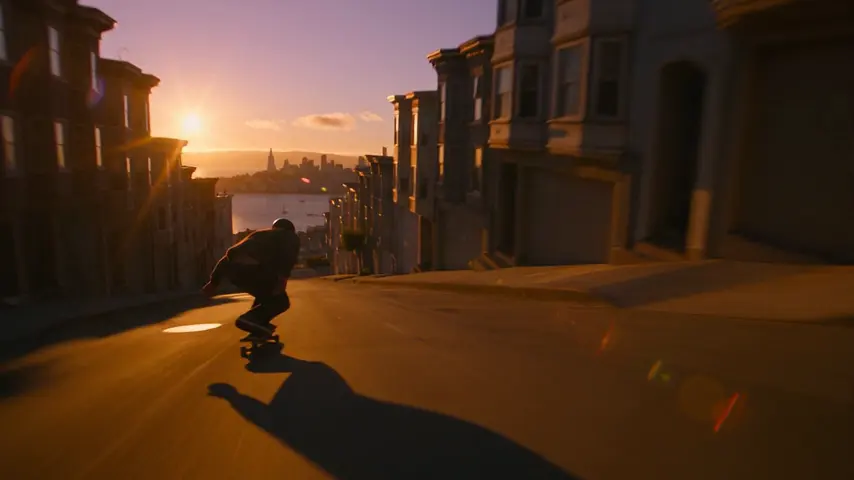
Tracking shot alongside a skateboarder bombing down a steep San Francisco street at golden hour, low angle, motion blur
Privacidad
Privado y sin restricciones
- Sin filtros en los motores propios de eroq: una política escrita en su lugar.
- No conservan nada y nada se entrena con tu trabajo.
- El modo privado no guarda ningún archivo.